

Why your AC unit is buzzing in Louisiana
After you send the request, you're done searching.
Hand it offWhy is my AC unit buzzing?
A buzzing sound from your AC usually shows up on a hot afternoon when the unit's been running nonstop and you just want it fixed before the house heats back up. It's not a noise you can ignore in Louisiana, where the system runs for months at a stretch and a small electrical problem left alone tends to turn into a unit that won't start at all.
Usually a failing capacitor or a loose electrical connection
That buzzing almost always points to the electrical side of the outdoor unit. The capacitor gives the compressor and fan motor the push they need to start, and once it starts to go bad, it struggles to do that and hums or buzzes instead of starting clean. Loose wiring or a contactor with pitted contacts can make the same sound. Running your AC through a long, humid Louisiana summer puts a lot of hours on that capacitor, more than a system in a milder climate ever sees, and that wear is usually what's behind the buzz. Left alone, a weak capacitor can take the compressor down with it, and that's a far more expensive repair than the capacitor itself.

A loose part inside the outdoor unit starts to vibrate.
The vibration hits the metal cabinet and hums louder.
A failing capacitor struggles to keep the compressor motor started.
The motor pulls harder and the buzz deepens.




A buzz you keep putting off turns into a unit that short-cycles or won't start at all, usually on the kind of afternoon when the house has already climbed past 80 inside. You'll hear it first from the patio or the driveway, that low hum from the outdoor unit, and then you'll notice the air coming from the vents isn't as cold as it was an hour ago. Leave a weak capacitor alone and the compressor it's trying to start can seize. Leave a loose panel or fan blade alone and the vibration works other screws loose over time. None of that fixes itself, and in a Louisiana summer the stretch between "it's buzzing a little" and "it's not cooling at all" can be a matter of days, not weeks. The part that's struggling right now is usually cheap to replace. The compressor it's attached to is not.


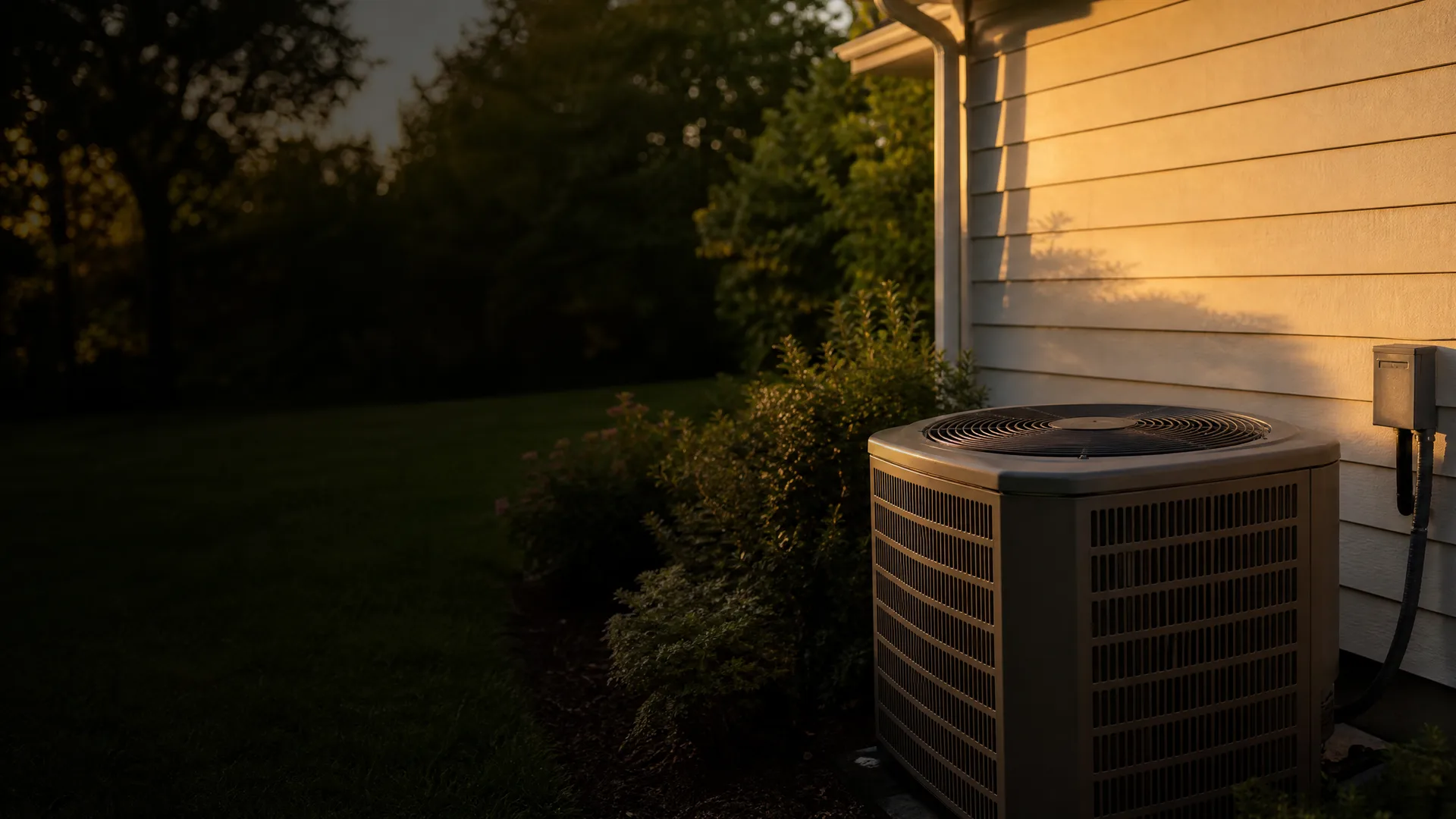
You're out back around seven, grass still warm under your feet, the light gone that flat gold it gets before dark. You cut across the yard to move the hose and that's when you notice it, the quiet. The condenser's running, you can hear the hum of the motor still trying, but the fan on top isn't spinning. Just sitting there while the sound underneath it climbs. Inside, the house hasn't caught up yet, but it will. You crouch down near the unit and the buzz is louder close up, steady, mechanical, not the sound it made last August. You straighten up, wipe your hands on your jeans, and head in to find your phone.
Power costs 12.52 cents per kilowatt-hour statewide
At 12.52 cents per kilowatt-hour, running your AC here costs less than it would in most other states. That's part of why a buzzing unit is worth fixing fast rather than living with, the repair itself is the only real expense once the noise shows up.
EIA-861 2025 statewide residential average
A compressor that keeps running with a bad capacitor pulls more amperage than it's rated for, and that extra draw is part of what you're hearing as the buzz gets louder.
Left alone, that strain is what trips the breaker or burns out the motor, and a unit that won't start is a harder fix than the one you caught at the buzzing stage.


Stop chasing an air conditioner pro
The pro who reaches out is licensed in Louisiana.
Send the request today and stop worrying about who to call.
No charge to send it. You decide if you hire them.
What are you hearing when you walk by the unit
Stand near the outdoor unit and you'll usually catch where the buzz is coming from. Sometimes it's steady, a low hum that doesn't change whether the compressor is working hard or idling. Sometimes it gets louder right as the unit kicks on, then settles some. You might notice the cabinet itself vibrating if you put a hand on it, or a rattle underneath the hum that wasn't there last summer. Inside the house, the sign is usually the air not keeping up, rooms staying warm longer than they should. Left alone, a unit buzzing like this is working harder than it's built for, and that's what wears out a motor or trips a breaker before its time.


What the buzz is telling you
- A buzzing outdoor unit usually points to a loose part, a weak capacitor, or a refrigerant line that's started to rattle.
- Left alone, that extra strain is what trips the breaker or burns out the compressor motor for good.
- A local contractor who works on these systems all summer knows which of those three it usually is before the panel's even off.
- You'll get matched with one licensed contractor, not a handful of companies calling to bid on the job.
- The noise tells you something's wrong well before the unit stops cooling the house on a hot afternoon.
- Catching it early, while it's still just a hum, is what keeps the repair small.
The buzz is the unit telling you something's loose, weak, or rattling before it tells you anything worse. A loose panel or bracket vibrates against the cabinet. A weak capacitor makes the compressor motor work harder than it should to start. A refrigerant line rattles against the frame it was never meant to touch. Each of those is a small job on its own. None of them stay small if the unit keeps running this way through a Louisiana summer.
A contractor who's out working on these systems all season has usually heard this exact buzz before, on a unit like yours, and knows which of the three it tends to be before the access panel comes off. That's not guesswork, it's just what happens when someone works on the same equipment every week from April through October. You're matched with one licensed contractor local to you, not a list of companies competing to call you back first.
The sound by itself doesn't mean the house stops cooling. It means the unit is working harder than it's built to, and that strain shows up later as a tripped breaker, a burned-out motor, or an afternoon when the compressor just doesn't start. Whatever's behind the noise, catching it while it's still just a hum is what keeps the fix a small one instead of a replacement.

Air Conditioner Repair
Hand off the air conditioner problem

- Tell a local repair pro what your air conditioner is doing.
- Say what's going on with your air conditioner, and a pro who works on them reaches out.

- After this form, you can stop searching for an air conditioner pro.
- One request and the search for a pro is handled.

- Fill out one short form instead of calling around.
- Explain the job once and skip repeating it on every call.

- Your request stays with one local pro.
- Your request goes to one pro, not a list of companies.