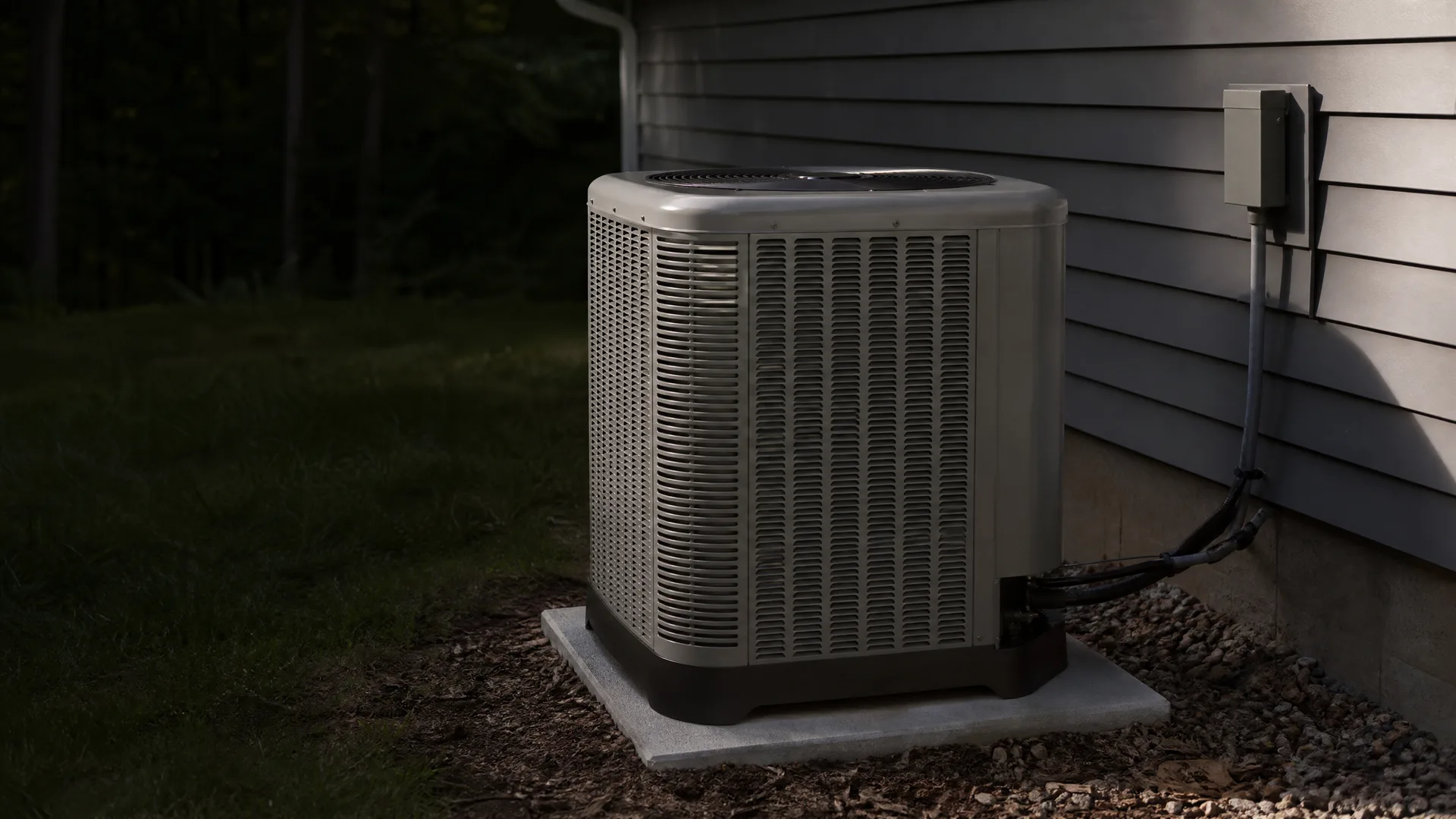

An outdoor air conditioning condenser unit on a concrete pad beside a house with horizontal siding, with an electrical disconnect box on the wall and shrubs to the right in low evening light.

A pro who works on air conditioners

Why your AC smells like burning in Louisiana

A burning smell from your AC usually means something electrical, not something on fire. It could be dust burning off a coil that just kicked on, or it could be a motor or wiring under strain. This page walks through what causes each kind of smell and what it means for your system. A local contractor who works on units like yours all summer can take a closer look if you want one.

Match me with a pro

A burning smell from your AC usually comes from one of a few places. If you just turned the system on after it sat idle, dust burning off the coil or the blower motor can smell sharp for a few minutes and then clear on its own. If the smell sticks around, it's more likely a motor bearing wearing out, a fan belt rubbing somewhere it shouldn't, or wiring that's carrying more current than it's built for. A burning rubber smell often points to a belt or a seized blower wheel. A sharp, acrid smell closer to a struck match usually means an electrical component is overheating, and that can be a fire risk if the system keeps running. With Louisiana summers running the AC hard for months at a time, parts that are starting to fail get pushed harder and faster than they would somewhere milder. If the smell is new and strong, turn the system off at the thermostat or breaker until it's been looked at.

A woman with long wavy brown hair in a grey ribbed sweater sits on a couch indoors, looking toward a window, with a potted palm-like plant and fireplace behind her.
A woman with long brown hair wearing a green V-neck top and beige cardigan sits on a light sofa, looking off to the side, with a dining table, lamp and framed picture in the background.
A woman with long dark hair in a cream knit sweater sits on a beige sofa indoors, looking toward a bright window with a houseplant and framed picture in the background.
A woman with long dark hair in a green knit sweater sits on a couch indoors, smiling and looking toward a window with a blurred room behind her.

Most central air conditioners run on a direct drive, so there's no belt to drag, but older or bigger units sometimes do, and a dragging belt or a worn bearing in the blower motor smells like burning rubber. A hot, sharp smell without any dust behind it points to wiring or a connection at the contactor running hotter than it should. If what you're catching is more fishy or like melting plastic, that's usually a capacitor or a circuit board overheating, and neither fish nor plastic is actually burning. Pay attention to what the outside unit is doing too. If it keeps running while the air coming out feels off, the compressor may be pulling more current than the wiring was sized for. A breaker that trips right along with the smell is telling you the same thing: too much current somewhere in that circuit. Louisiana's humidity keeps your system running longer stretches most of the year, and that extra runtime is hard on a connection that was already starting to go.

What the smell is telling you

  • A burning rubber smell often points to the fan belt or a bearing in the blower motor dragging against its housing.
  • A hot, acrid smell with no dust smell behind it usually means wiring insulation or a connection at the contactor is overheating.
  • A fishy or plastic smell means a component is overheating, often a capacitor or circuit board, not actual fish or plastic burning.
  • If the outside unit keeps running when the air feels wrong, the compressor can draw more current than the wiring was built for.
  • A breaker that trips along with the smell means the system is already pulling too much current somewhere in the circuit.
  • Humidity in Louisiana pushes your AC to run longer stretches, and that extra runtime wears on connections that were already marginal.
An outdoor air conditioning condenser unit on a concrete pad beside a house with white horizontal lap siding, with an electrical disconnect box and insulated refrigerant line on the wall and a shrub over mulch to the right.
A unit running clean smells like nothing at all, just cool air coming through the vents.
An outdoor air conditioner condenser unit on a concrete pad beside a house with light horizontal lap siding, with an electrical disconnect box and conduit on the wall behind it.
A disconnect box or lines showing wear like this is where heat builds up enough to smell.

Why does my AC smell like burning plastic?

A burning plastic smell is different from a dusty smell. It doesn't fade after a few minutes like dust burning off a coil does. If you're catching that smell every time the AC kicks on, or it's getting stronger, something inside the unit is heating up more than it should, and plastic is one of the few materials in there that can actually melt.

It's usually a part overheating against plastic insulation or housing nearby

Inside your air handler and outdoor unit, wiring is wrapped in plastic insulation, and some housings and mounts are plastic too. When a motor draws more current than it should, or a connection at the contactor loosens and starts arcing, the heat generated is enough to soften or melt plastic close by. That's what you're smelling. It won't always come with a visible spark or smoke, especially early on. In Louisiana, summer humidity adds load to the system for months at a stretch, and that extra strain is exactly the kind of thing that pushes a weak motor or a loose connection past where it was running fine before. Left alone, the smell usually gets worse, not better, since the part causing it keeps heating the same spot every time it runs.

An outdoor air conditioner condenser unit on a concrete pad beside a house wall, with a gray electrical disconnect box and conduit above it and grass in the foreground.

Why the smell comes and goes

A capacitor or a run of wiring that's starting to overheat doesn't always smell the same way twice. It can run fine for days, then smell hot again the next time the outdoor unit kicks on during the hottest part of the afternoon. Louisiana summers put a long, steady load on that equipment, and a part that's close to failing tends to show it under load, not while it's sitting idle. That's why a smell you noticed once and then lost track of is still worth having someone look at.

A gray outdoor air conditioner condenser unit on a concrete pad beside a house with horizontal lap siding, surrounded by white gravel and a lawn, with a white wall at left.

What a tech checks first

A contractor who works on AC systems all summer usually starts at the disconnect box outside and the contactor inside the outdoor unit, since that's where a loose connection builds up heat fastest. From there it's the blower motor and the wiring at the air handler. None of that takes guesswork for someone who sees it every week. A local contractor matched to your system is the one who'll know which of these is common on your equipment and can check it before it turns into a bigger repair.

Keep Running It or Shut It Off

Keep running it

  • If the smell is faint and only shows up right when the unit kicks on, it may just be dust clearing off the coil.
  • Running it anyway while a wiring or motor problem is building means that part keeps heating up every cycle.
  • A contactor that's starting to pit and arc won't fix itself by being left alone, it gets worse with every start and stop.
  • If the smell is already strong or getting stronger each time, running the unit longer just adds more hours on a part that's failing.
  • Shutting it off costs you comfort for a day in a Louisiana summer, which matters when the house is full of people who need to stay cool.

Shut it off and call

  • A hot, acrid smell with no dust behind it is usually wiring or a connection overheating, and that's worth having a contractor look at before it runs again.
  • A local contractor who works on AC units all summer has likely seen the same smell trace back to the same handful of parts.
  • One contractor means one visit and one diagnosis, not several trucks showing up with different guesses.
  • Shutting the unit down stops a strained motor or overheating wire from reaching the point where it trips a breaker or fails outright.
  • A short time without AC is easier to manage than a repair that got bigger because the unit kept running on a failing part.
A gray-haired woman in a cream knit sweater stands in a dimly lit kitchen at night, looking to her right, with a round loaf of bread in the foreground and a dark window and potted plant behind her.
A woman with her hair in a bun holds a sleeping young child against her chest, both wrapped in a textured beige knit blanket on a sofa in a dimly lit room with a lamp, framed picture, and bookshelf behind them.

Get your air conditioner to the right pro

Your AC runs hard for months on end down here, and electrical parts that are starting to fail usually get worse under that kind of load, not better. A contactor that's pitting or wiring that's chafed against a panel edge can hold on for a while and then go in the middle of a July afternoon with the house at its hottest. Louisiana homes lean on electric cooling and heating both, so when the AC is down, there's no gas furnace or window unit most people have sitting around as a backup. Finding the source of a burning smell isn't something to figure out by ear over a few more cycles. A contractor who works on AC units all summer in this heat has seen what a contactor or a dragging blower motor looks like before it gets dangerous, and they'll know what they're looking at as soon as they open the panel. Get matched with one who covers your area and let them take it from here.

A single-story red brick ranch house with a gray shingled roof, white-framed windows and a central dark front door, fronted by a wide asphalt driveway, green lawn and large deciduous trees on both sides under a bright hazy sky.

Summer dew points in Louisiana average 73°F across June, July and August, a figure from NOAA climate data. Air that heavy makes your AC pull moisture out of the house nonstop just to keep up, and that's a longer run time on the motor and the electrical parts behind it. A system that might cycle on and off somewhere drier can end up running for hours straight here. That steady load is exactly what pushes a weak connection or a tired motor toward overheating instead of letting it cool off between cycles. If a burning smell shows up on one of the muggiest afternoons, the heat and the humidity both played a part.

NASA POWER T2MDEW county cells weighted by homes

What are you noticing when your AC kicks on

You probably smell it most right when the unit cycles on, maybe stronger in one room than others if the return is nearby. You might also notice the breaker tripping more than it used to, or the outdoor unit humming a little different before it kicks off on its own. Some households hear a faint click or buzz near the outdoor disconnect that wasn't there before. None of that means the house is in danger right now, but a part that overheats on every cycle is wearing down a little more each time it runs. Down here the AC doesn't get much of a break, so a problem that would sit quiet for weeks somewhere else tends to show up fast, and ignoring it long enough can mean losing cooling on a day you need it.

A gray outdoor air conditioner condenser unit on a concrete pad beside a house with white horizontal siding and a brick foundation, with a wall-mounted disconnect box and conduit, and a green shrub with mulch at left.

Running clean

This is what normal looks like. The condenser sits on its pad, the lines and conduit run neat up the wall to the disconnect, and the unit just hums along. No smell at all, just cool air out of the vents while it cycles on and off through the day.


An outdoor air conditioning condenser unit on a concrete pad beside a house with white horizontal vinyl siding, with a gray electrical disconnect box and refrigerant lines on the wall behind it.

Grime and strain

Dirt caked on the grille and top cover like this traps heat the unit needs to shed. The motor and the electrical parts behind that grille run hotter than they should, cycle after cycle, and that's often where a burning smell starts.

Power costs 12.52 cents per kilowatt-hour statewide

At 12.52 cents per kilowatt-hour, your AC is already one of the bigger draws on your power bill most months. A motor or wiring problem that's starting to overheat makes the unit work harder to do the same job, and that shows up on the bill before you ever catch the smell again.

EIA-861 2025 statewide residential average

A gray outdoor air conditioner condenser unit on a concrete pad beside a house with horizontal siding and a stucco foundation, with a disconnect box and conduit on the wall, decorative gravel, mulch, and a shrub nearby.

The unit sitting clean

The condenser sits on its pad next to the gravel bed, coil grilles open to the air. The disconnect box on the wall is dry and the conduit runs straight down to it. Nothing crowds the coil, so the fan pulls air through it without a fight.

An outdoor air conditioning condenser unit on a concrete pad beside a house with horizontal lap siding, with an electrical disconnect box and conduit on the wall, mulch and a green shrub to the right, and a concrete walkway in the foreground.

The coil loaded with debris

Dirt and grass clippings have packed into the grilles here, thick enough to block airflow through the coil. The unit has to run longer to move the same heat, and that load reaches the disconnect and conduit mounted right beside it.

A woman in a cream cardigan and jeans stands with one hand raised facing an open front door of a gray horizontal-siding house, with a black lantern wall light, a potted shrub with yellow flowers, and a stone-faced porch column.

A burning smell is the system telling you something is wrong

A few minutes of dust smell when the AC kicks on after sitting idle is normal and it clears. A smell that sticks around, gets stronger, or comes back every cycle is a part under strain, and down here that part doesn't get a break to cool off and recover. It runs hard again that afternoon and keeps wearing.

A contractor who works on AC systems in this climate all summer has seen what a pitted contactor or a dragging blower motor looks like before it fails outright, and knows where to check first on a unit that's been running this hard for this long. If you request a repair through this page, one licensed contractor local to your area will reach out to look at your system, not a handful of companies competing for the job. You'll know where you stand once they've had a look at what's actually going on behind that smell.

Interior corner of a room with a window and sheer curtain at left, a gray upholstered sofa with a cushion at right, and a round wooden table holding stacked books and a round vase with an olive branch.
An outdoor air conditioning condenser unit sits on a concrete pad beside a house with horizontal lap siding, with a wall-mounted disconnect box and refrigerant lines entering the wall, gravel and grass around it and dark trees behind.

The right pro for this job

Step 1 of 3: Equipment