Why your AC compressor won't kick on in Louisiana

Step 1 of 3: Equipment

Why won't my AC compressor turn on in Louisiana?

Your AC is running, the fan might even be blowing, but outside the condenser unit sits quiet and the air coming through the vents is warm. With Louisiana summers as muggy as they are, a compressor that won't start means the heat and humidity build fast, and you want to know whether this is something simple or something that's going to need a part.

Most often it's the capacitor or a safety switch cutting power to the compressor

The capacitor gives the compressor its initial jolt of power to start spinning. When it weakens, the compressor hums but never kicks on, or does nothing at all. A tripped high pressure switch or a low refrigerant charge can also keep it from starting, since the system is built to shut the compressor down rather than let it run and get damaged. With how hard AC units work through the Louisiana summer, these parts see a lot of strain over the years. A compressor that won't start isn't something to leave alone. Running the system with a failing capacitor or a low charge for too long can burn out the compressor itself, which is a far bigger repair than the part that failed first.

A dimly lit living room with a black pedestal fan on a wood floor beside a gray sofa with a patterned pillow, a wooden coffee table in the foreground, potted plants at left, and a curtained window with blinds behind.

It's just past two in the afternoon and the blinds are drawn, but the sun still finds the gaps and lays stripes of light across the carpet. The floor fan next to the couch is turning on its highest setting, pushing the same warm air around the room. You've already checked the vents twice. They're blowing, but it's not cold, not even close. Outside, the condenser unit sits against the side of the house, silent, while everything else in the yard shimmers in the heat. You can hear the hum of the fan inside and nothing else. The air in the room feels thick, the kind of thick that doesn't move no matter how long you sit in front of the fan.


A gray outdoor air conditioning condenser unit on a composite pad beside a house with horizontal lap siding, with a wall-mounted disconnect box, refrigerant lines, and a wooden fence and shrubs to the left.
The compressor hums on, the condenser fan turns, and cold air keeps coming through the vents even as the Louisiana heat pushes back outside.
An outdoor air conditioning condenser unit on a concrete pad beside a house with light vinyl siding, with electrical conduit running to a wall-mounted disconnect box and a shrub in mulch to the right.
The condenser sits silent against the siding, no hum, no fan turning, while the thermostat calls for cooling that never arrives.
A gray-haired man in a dark sweater sits on a light gray sofa in a living room, looking toward a sunlit window with trees outside.
A gray-haired man in a dark blue sweater sits on a light gray sofa in a sunlit living room, looking off to the side, with a potted plant, shelving unit, and large glass doors behind him.
A bearded man with graying hair in a dark green sweater sits on a sofa in a living room, looking off to the side, with a sliding glass door and a dim kitchen doorway behind him.
A gray-haired man in a dark knit sweater sits on a light gray sofa in a living room, looking toward a sunlit window, with houseplants, a lamp, and framed art in the background.

Compressor Running vs. Compressor Dead

Compressor runs hard

  • The outside unit hums and the fan spins, but the air at the vents stays warm or barely cool.
  • A contactor stuck closed or a failing run capacitor can leave the compressor straining without actually cooling.
  • Run it this way for more than a day in Louisiana heat and the compressor itself can overheat and fail outright.
  • Breakers rated for this equipment can trip repeatedly if the compressor is pulling more current than it should.
  • A licensed tech can test capacitor and contactor condition in minutes and catch this before the compressor burns out.

Compressor stays silent

  • No hum, no fan, nothing at the condenser even though the thermostat is calling for cooling.
  • This points upstream, to the thermostat signal, a tripped breaker, or a safety switch keeping the unit from starting at all.
  • Low refrigerant can trip a pressure switch that shuts the compressor off before it ever engages, a common call here in summer.
  • Because nothing is running, there's no risk of burning out the compressor by waiting, but the house keeps getting hotter.
  • A contractor who works this equipment every summer can trace the signal path and find where it's breaking before calling for a part.
A gray outdoor air conditioning condenser unit sits on a concrete pad beside a house with horizontal siding, connected by insulated lines to a wall-mounted disconnect box, with a shrub and gravel bed to the right.

Running clean

The condenser sits on its pad with the disconnect box mounted close by, lines running up to it neat and intact. Coil fins are clear, the fan spins free, and the compressor kicks on as soon as the thermostat calls for it. Nothing blocking airflow, nothing fighting itself to start.

An outdoor air conditioning condenser unit sits on a concrete pad beside a house with horizontal vinyl siding, with a gray electrical disconnect box and insulated refrigerant line on the wall above, surrounded by bare mulched ground.

Caked and quiet

Dirt and grime have built up thick across the coil fins and housing, and the unit looks like it's been ignored a few summers too many. A compressor working behind that much buildup runs hotter than it should, and heat is exactly what trips it offline before it ever starts.

What are you noticing right now in your house

You've probably checked the thermostat twice already. The house is holding at whatever temperature it was an hour ago, maybe climbing a degree or two since. Vents are moving air but it's not cold, just room temperature air getting pushed around. Walk outside and the condenser is quiet, no hum, no fan turning, even though you can hear the system running from inside. The breaker might have tripped, or it might not have. Left alone through a Louisiana afternoon, a house like this climbs fast, and a compressor that's straining to start without succeeding can trip a breaker repeatedly or burn out a part that was still fine an hour ago.

A gray outdoor air conditioning condenser unit on a concrete pad beside a house with horizontal vinyl siding, a brick foundation, downspout, electrical disconnect box, mulch bed and a green shrub.

Clear and running

The condenser sits on its pad, mulch and a trimmed shrub around it, the disconnect box mounted clean on the siding nearby. Air moves through the grille without resistance, and the compressor kicks on the moment the thermostat calls for it.

An outdoor air conditioning condenser unit with a dirty mesh coil guard sits on a concrete pad beside a house with horizontal lap siding, a wall vent, and conduit running to an electrical disconnect box.

Caked in dirt

The grille and the fins behind it are coated in dirt and debris built up over time. Air can't pull through fins that clogged, and a compressor working against that kind of blockage is a lot more likely to trip offline or stop responding at all.

An outdoor air conditioning condenser unit on a concrete pad beside a house with light blue horizontal siding, with a shrub to the left and a conduit and disconnect box on the wall to the right.
Before you get your air conditioner repair
An outdoor air conditioning condenser unit on a concrete pad beside a house with horizontal lap siding, with a gray electrical disconnect box and conduit on the wall, mulch bed and shrub to the right, and mown grass in the foreground.
After you get your air conditioner repair

Get your air conditioner to the right pro

The pro who reaches out is licensed in Louisiana.

You only hire the pro if you want to.

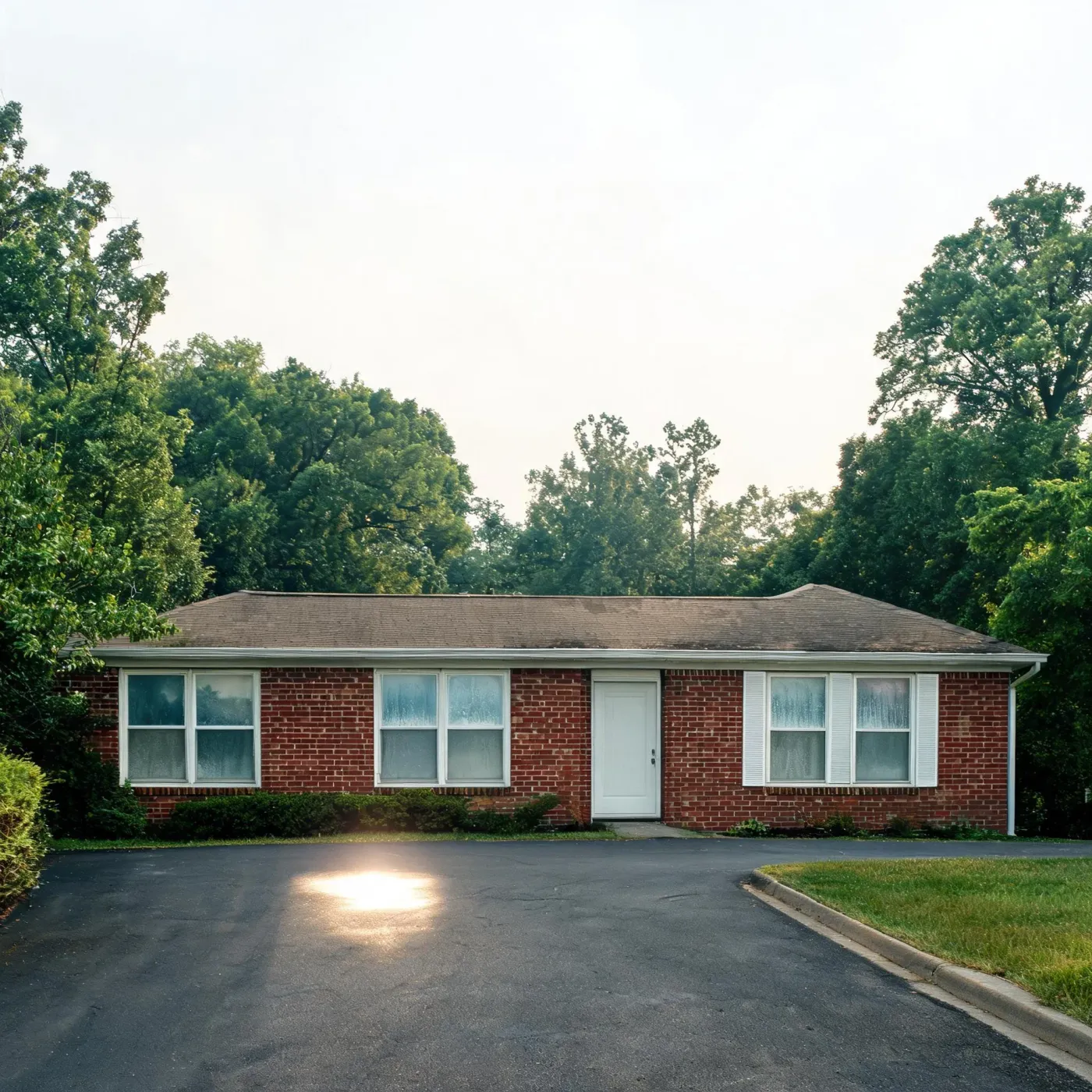
A single-story red brick ranch house with a white door, white-trimmed windows and a shingled hip roof, fronted by a wide asphalt driveway with sunlight glare, surrounded by green deciduous trees under a pale sky.

A 73°F summer dew point is the average across Louisiana for June, July and August, according to NOAA climate records. That's heavy, sticky air, the kind where sweat doesn't dry on your skin. Your compressor has to run long stretches to pull that moisture out along with the heat, which means more hours under load and more wear on the parts that let it start: the contactor, the capacitor. When one of those weakens, a compressor that's been grinding through air this thick all summer is the one that finally won't kick on at all.

NASA POWER T2MDEW county cells weighted by homes

A middle-aged woman with shoulder-length dark hair, wearing a gray cardigan over a cream top, sits in an upholstered armchair and looks toward a sunlit window, with a shelf holding framed pictures and a plant behind her.
A woman and a child wrapped together in a thick knitted blanket on a sofa, both with eyes closed, with a lit table lamp and houseplant in the dim background.
  1. Thermostat calls for cooling and sends power to the contactor coil.

  2. The contactor pulls in and closes the circuit to the compressor.

  3. The run capacitor gives the compressor motor its starting push.

  4. The compressor starts turning and begins pumping refrigerant.

A woman in a cream sweater and jeans stands in the open doorway of a white stucco house, holding the dark door, while a man in a dark quilted jacket seen from behind walks toward the entry past potted plants.

What a dead compressor costs you in your own house

Nothing cools while that compressor sits quiet, and in a Louisiana summer that shows up fast. The indoor unit still runs, still pulls power, but all it's doing is moving warm air past a blower that has nothing to cool it with. Your electric bill climbs for a house that's getting hotter anyway, not cooler. Humidity backs up too, since the only thing pulling moisture out of your air is the same coil that needs a working compressor to do it.

A compressor that won't start isn't something to keep flipping the thermostat on and hoping for. It's one part failing, usually the contactor or the capacitor, and it takes someone who works on this equipment all summer to know which one and whether anything else got dragged down with it. Get matched with a licensed contractor near you in Louisiana, someone who sees this exact failure on repeat in this climate, and let them take a look before the heat in your house gets ahead of you.

A living room corner with a beige sofa and cushion, a round wooden coffee table holding a pale ceramic vase of eucalyptus stems and a wooden bowl, and a curtained window with a potted plant above a latticed radiator cover in the background.

Power costs 12.52 cents per kilowatt-hour statewide

At 12.52 cents per kilowatt-hour, a compressor that's dead weight in the circuit isn't adding to your bill, but one that's short cycling or straining against a bad capacitor is. Getting it fixed keeps that number from turning into a bigger one next month.

EIA-861 2025 statewide residential average

A compressor that won't start usually comes down to one part failing to do its job: a contactor stuck open, a dead capacitor, a tripped overload, or a control board not sending the signal it should. Whichever it is, the fix depends on someone opening the panel and testing the part rather than guessing at it. A tech who works on condensers all over Louisiana through these summers has likely seen the same failure on a dozen other units this month alone, and knows what to check first and what it looks like when it fails. Request a repair through this page and you get matched with one licensed local contractor, not a handful of companies competing for your callback. That contractor hears your situation once, comes out, and finds the part that's actually failed. Your compressor is either going to need a new part or a new wire connection. Either way, the unit outside starts pulling in and the air at your vents turns cold again.

A house roofline with a stone chimney rises above trees, with a tall pine, Spanish-moss-draped oak branches, and misty hills in the background.

The right pro for this job

Get one local pro

Asking costs nothing, and the choice to hire stays yours.

A stuck contactor or a dead capacitor won't fix itself, and running the system while it sits bad can damage the compressor further. A contractor local to your part of Louisiana who works on these units all summer can tell you which part failed and get the cold air moving again.