
The R-410A phase-out and new AC units in Louisiana

Step 1 of 3: Equipment

R-410A is being phased out, and 2025 is the last year manufacturers can build new central air conditioners that use it. The federal government set this timeline to cut the refrigerants tied to ozone damage, and R-410A is on the way out everywhere, not just in Louisiana. New units sold now run on R-454B, a different refrigerant in different equipment. This matters here because Louisiana summers run long and your AC works hard for most of the year to keep up with the humidity. If your system is old enough to need a major repair or a full replacement, you'll likely be looking at R-454B equipment, and that calls for a contractor who already knows how to size, install and service it. The refrigerant change itself doesn't make your current unit stop working or illegal to repair. It does mean that when the time comes to replace it, the installation has to be done right the first time.

A gray outdoor air conditioning condenser unit on a concrete pad beside a house with horizontal siding and a stone veneer base, with a wall-mounted disconnect box and conduit, next to a shrub bed and a concrete patio.

A unit still running on R-410A

If your condenser looks like this and runs fine, parts and refrigerant are still around for now. A Louisiana contractor who services this equipment all summer can keep it going and tell you honestly how many years you have left in it.


An outdoor air conditioner condenser unit on a concrete pad beside a house with light gray vinyl siding, with a gray electrical disconnect box and conduit on the wall, gravel beds and dried plants nearby, and a concrete sidewalk in the foreground.

A unit on its way out

Weathered housing, weeds growing up around the pad, a compressor that's been running on borrowed time. When a unit like this needs a major repair, replacing it with a new system makes more sense than chasing parts for the old refrigerant.

A woman with shoulder-length brown hair wearing a beige knit cardigan sits in a gray upholstered armchair near a window, looking off to the side with a slight smile, with bookshelves blurred in the background.
A woman and a sleeping child wrapped together in a cream knitted blanket on a couch, with a potted plant, framed photo and lit lamp in the background.

Why R-32 is replacing R-410A

Most new central air conditioners sold now run on R-32. It carries heat better than R-410A, so the compressor doesn't have to work as hard to move the same amount of heat out of your house. That matters in Louisiana, where the system can run from April into October. R-32 also breaks down faster in the atmosphere if it ever leaks out, which is the main reason it's the one the industry settled on. It's a change in the refrigerant, not in how a split system or a heat pump is built. A contractor installing one of these units still sets the same coil, condenser and line set you'd expect, just charged with a different gas.

What changes at install

R-32 is mildly flammable, which R-410A is not, so the equipment built for it has different safety listings and the line sets, fittings and recovery tools used during installation are specific to that refrigerant. A contractor who installs these regularly carries that equipment and knows the brazing and pressure testing rules that come with it. You won't see a difference in how the unit cools your house or in your thermostat settings. The difference is in what's done correctly behind the wall and at the condenser during the install, which is exactly the part a homeowner can't check once the job is finished and the panels are back on.

A man with grey hair and stubble in a dark sweater sits on a grey sofa indoors, looking off to the side, with a potted plant and a sunlit window behind him.
A man with gray hair, a beard and glasses, wearing a dark green sweater, sits on a gray sofa in a sunlit living room with a potted plant, table lamp and wooden sideboard behind him.
A middle-aged man with graying hair and a short beard sits on a blue sofa in a living room, looking toward a window, with a bookshelf, lamp and framed picture in the background.
A man with graying curly hair and a dark green sweater sits on a gray sofa in a sunlit living room, looking off to the side, with a framed picture, shelving, an armchair and a window with sheer curtains behind him.

If your system is old enough

An AC that's already past a repair or two is the one where a refrigerant leak decides things for you. R-410A isn't vanishing in 2026, but as fewer new units use it, a contractor may end up pulling from smaller supply to recharge an old condenser. In a Louisiana summer that's not a slow problem. A dead AC in July means calling someone the same day, not shopping around, and whoever you get may not know your system or your house.

If you're installing new

A new unit put in now almost certainly runs on R-32, and that's the easier path. You're not trying to keep an older refrigerant supplied for the next ten or fifteen years, and you're not guessing what a repair will cost when a part specific to R-410A gets harder to find. The install itself still has to be done right, with the charge and the airflow set correctly for your house, which is why the contractor doing it matters as much as the refrigerant inside it.

A weathered outdoor air conditioner condenser unit on a concrete pad beside a house with horizontal vinyl siding, with a conduit and disconnect box on the wall to the right.
Before you get your air conditioner installation
A gray outdoor air conditioning condenser unit on a concrete pad beside a house with horizontal lap siding, with a conduit and electrical disconnect box on the wall and a green shrub in mulch to the right.
After you get your air conditioner installation

Send one request and you're done looking

A refrigerant changeover is not something you can see from your thermostat, but it decides what happens the next time your condenser needs a part or a recharge. In Louisiana, where that unit runs hard from April through October, you don't have months to sort out whether to repair or replace. The contractor who gets your request is local, licensed, and works on this equipment all summer long, so they've already seen what fails first in homes like yours and what a straight replacement looks like once R-410A units get harder to source parts for. Only one contractor gets your information, not five companies competing for your callback. Once you send the form, the job of finding someone who knows this changeover and your climate is off your plate. You get to stop researching refrigerants and get back to the only thing that matters this summer: a system that keeps up with the heat outside your door.

Wait for a breakdown in July, and the choice gets made under pressure. You take whatever unit a contractor can get installed fastest, R-32 or not, because the house is 95 degrees and it can't wait.

Replace it before that happens, and you pick the unit and the contractor. A licensed installer who works on these systems in Louisiana every summer can walk you through what R-32 means for your house, not just your condenser.

Power costs 12.52 cents per kilowatt-hour statewide

At 12.52 cents a kilowatt-hour, running your air conditioner from April through October adds up fast. A newer R-32 unit that doesn't have to work as hard to cool your house will show up as a lower number on that bill every month.

EIA-861 2025 statewide residential average

  1. A Louisiana contractor checks your home's load and current ductwork first.

  2. The old unit and any remaining R-410A get properly recovered and removed.

  3. New line sets or fittings go in sized for R-32 pressures.

  4. The R-32 condenser and coil are set and connected.

Why does your AC seem to be working harder than it used to?

You notice it in July and August. The unit runs longer to hit the same temperature, and the house still feels sticky by afternoon. Maybe it's cycling on and off more than it used to, or you hear it kick on again ten minutes after it shut off. The outdoor unit might be icing up, or you've had a contractor out once or twice already for a recharge. None of that means it's about to quit tomorrow. But an aging system working harder than it should is also the one most likely to need a part or a refrigerant top-off you can't get as easily once R-410A production winds down, and that's a cost that lands on you, not on a schedule you control.

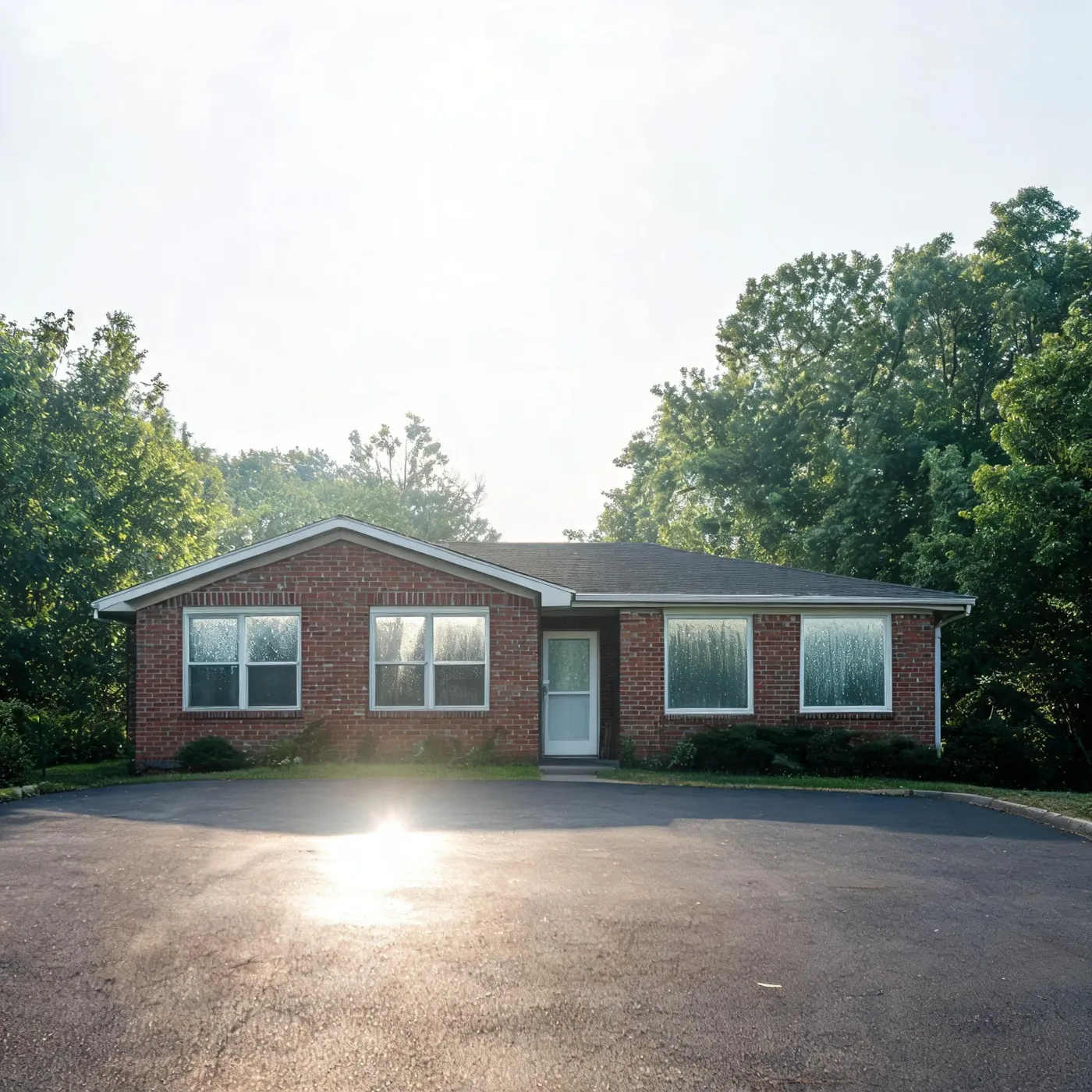
A single-story red brick ranch house with white-framed windows and a white storm door, fronted by a large asphalt parking area and backed by leafy green trees under a bright hazy sky.

A summer dew point averaging 73°F across June, July and August is what makes Louisiana air feel heavy even after your AC has been running for hours, according to NOAA climate data. Your air conditioner isn't just dropping the temperature. It has to pull that moisture out of the air before the house feels dry, and that's the harder half of its job. High dew points mean long run times and a coil working against a lot of water, not just heat. You'll notice it as a system that seems to run all afternoon and still leaves floors or windows feeling damp. That load is steady here from April through October, and it's part of why the refrigerant inside your unit matters more in Louisiana than it does somewhere drier.

NASA POWER T2MDEW county cells weighted by homes

A gray outdoor air conditioner condenser unit on a concrete pad beside a house with horizontal lap siding, with a wall-mounted disconnect box and conduit at left and a green shrub and mulch bed at right.
A disconnect box feeds the unit cleanly, and nothing around it hints at a problem brewing underneath.
An outdoor air conditioner condenser unit on a concrete pad beside a house with horizontal lap siding, with a conduit running to a gray electrical disconnect box on the wall.
Same setup, same wall, but a unit like this is the one a contractor gets called about mid-July.

Where this leaves you

  • R-410A still works and is still available, but 2025 is the last year it comes in a new central air conditioner.
  • Replacing before a breakdown lets you choose an R-32 unit on your schedule instead of whatever a contractor can grab in July.
  • A Louisiana contractor who works on this equipment all summer knows which parts in your area tend to fail first.
  • Matching you with one licensed local contractor means one point of contact, not a round of competing calls to sort through.
  • Correct line sets, fittings and charge for R-32 matter as much as the condenser itself, and a local installer sizes those for your house.
  • Whether you wait or replace now, the decision belongs to you, not to whichever unit happens to be sitting in a warehouse that week.

R-410A isn't gone, and your unit isn't suddenly broken because the rule changed. What changed is what gets built going forward, and that's worth knowing before your next recharge or your next breakdown, whichever comes first. A contractor who works on air conditioners in Louisiana all summer has seen which condensers in your area hold up and which ones end up in the same driveway twice. That's not something a warranty card tells you. It's something that comes from doing the work here, season after season, on the same kind of equipment your neighbors run. When you send a request through this page, it goes to one licensed contractor local to you, not a list of companies bidding for the job. You get a single call to answer, from someone who already knows the heat and humidity their work has to stand up to. From there the choice is still yours. You can keep your R-410A unit going as long as it runs clean and the parts are there, or you can move to R-32 on a weekend that suits you instead of a July afternoon that doesn't. Either way, you're deciding it, not the stock on a warehouse shelf. The phase-out set a date for manufacturers. It didn't set one for you.

Kitchen corner with cream upper cabinets, oak lower cabinets, white marble-look countertop, beige tile backsplash, a ceramic vase of greenery, a wooden cutting board and bowl, and a black-framed window at right.
Interior corner of a room with a white-framed window and wide sill, beige walls with panel molding, a wooden cabinet holding a ceramic vase with a green leafy plant, and blurred shrubs and trees outside.
A wood-framed armchair with beige cushions and a woven lumbar pillow sits in a corner beside a large window overlooking green trees, with a tall ceramic vase holding leafy branches on the left and plaster walls and wood flooring.
Interior corner with a white-framed window above a sill, beige walls with baseboard molding, a greige shaker-style cabinet with brass knobs and a potted plant on top, light wood flooring and a woven jute rug.
A dark-framed six-pane window with white trim and sill set in gray horizontal lap siding, with hydrangea shrubs below and a white column and shingled roof section at left.

Finding a pro stops being your job

Only one pro gets your request, so you hear from one company.

Send my request

You only hire the pro if you want to.