
Signs of a bad AC capacitor in Louisiana

Step 1 of 3: Equipment

A bad AC capacitor usually shows up as an outdoor unit that hums but won't start, or a fan that turns slowly before stalling out. Sometimes the AC shuts off on its own a few minutes after it kicks on. The capacitor stores the charge that gets the compressor and fan motor moving, and in Louisiana that part works hard for months at a time with barely a break between April and October. Heat wears capacitors down faster than almost anything else in the system. Once it starts to fail, the unit struggles to start each cycle, which puts more strain on the compressor itself. Catching it early, while it's still just a slow start or an occasional stall, is a lot better than catching it once the compressor is damaged too. A capacitor problem rarely fixes itself, and it rarely stays small for long.

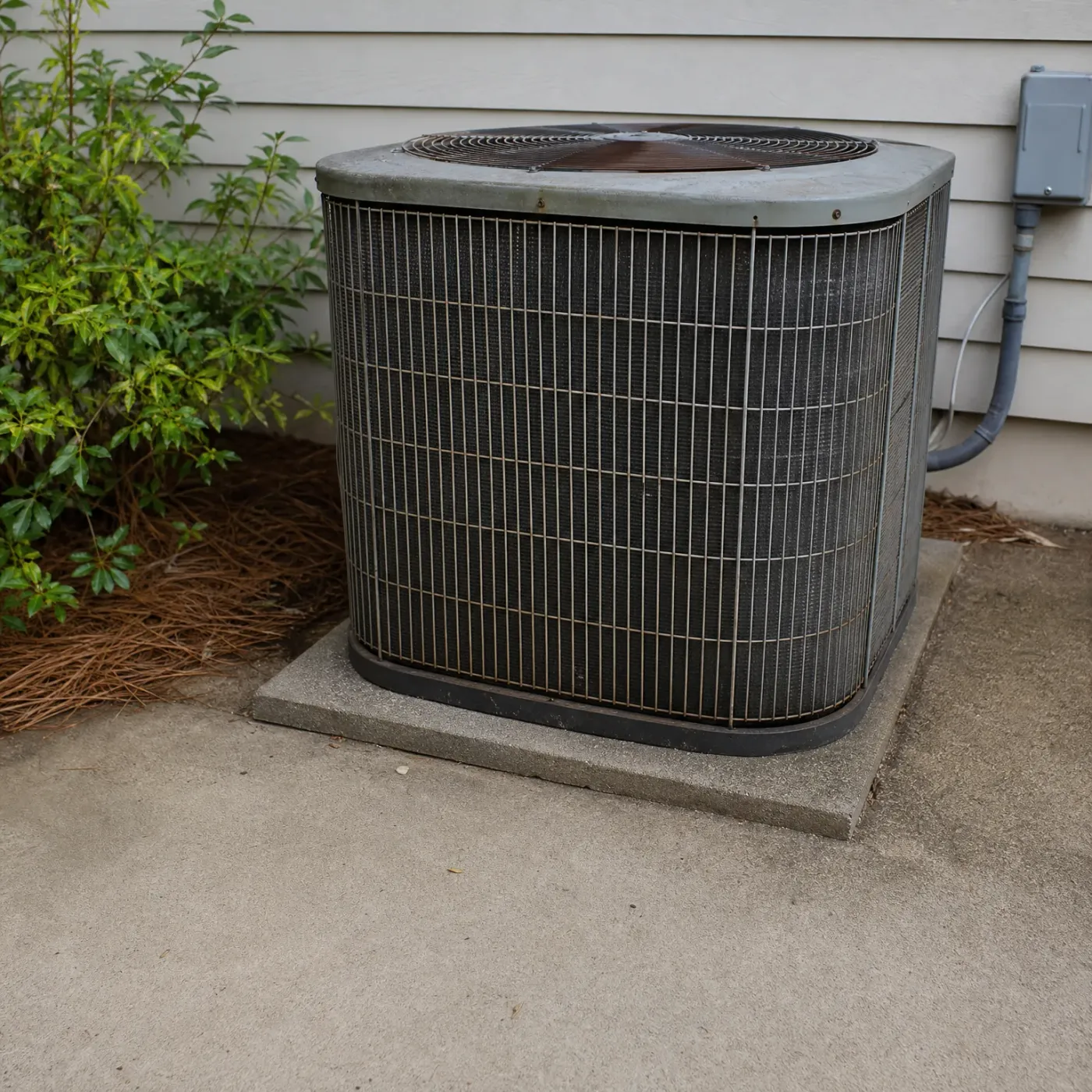
A gray outdoor air conditioning condenser unit on a concrete pad beside a house with horizontal gray siding, with a wall-mounted electrical disconnect box and insulated refrigerant lines, and blue hydrangeas in a mulched bed to the left.

Running the way it should

The fan spins up right away and holds a steady speed. The compressor kicks in with one solid click, no hum or hesitation. It cycles on, runs, and shuts off clean. If yours does this, the capacitor is holding its charge fine.

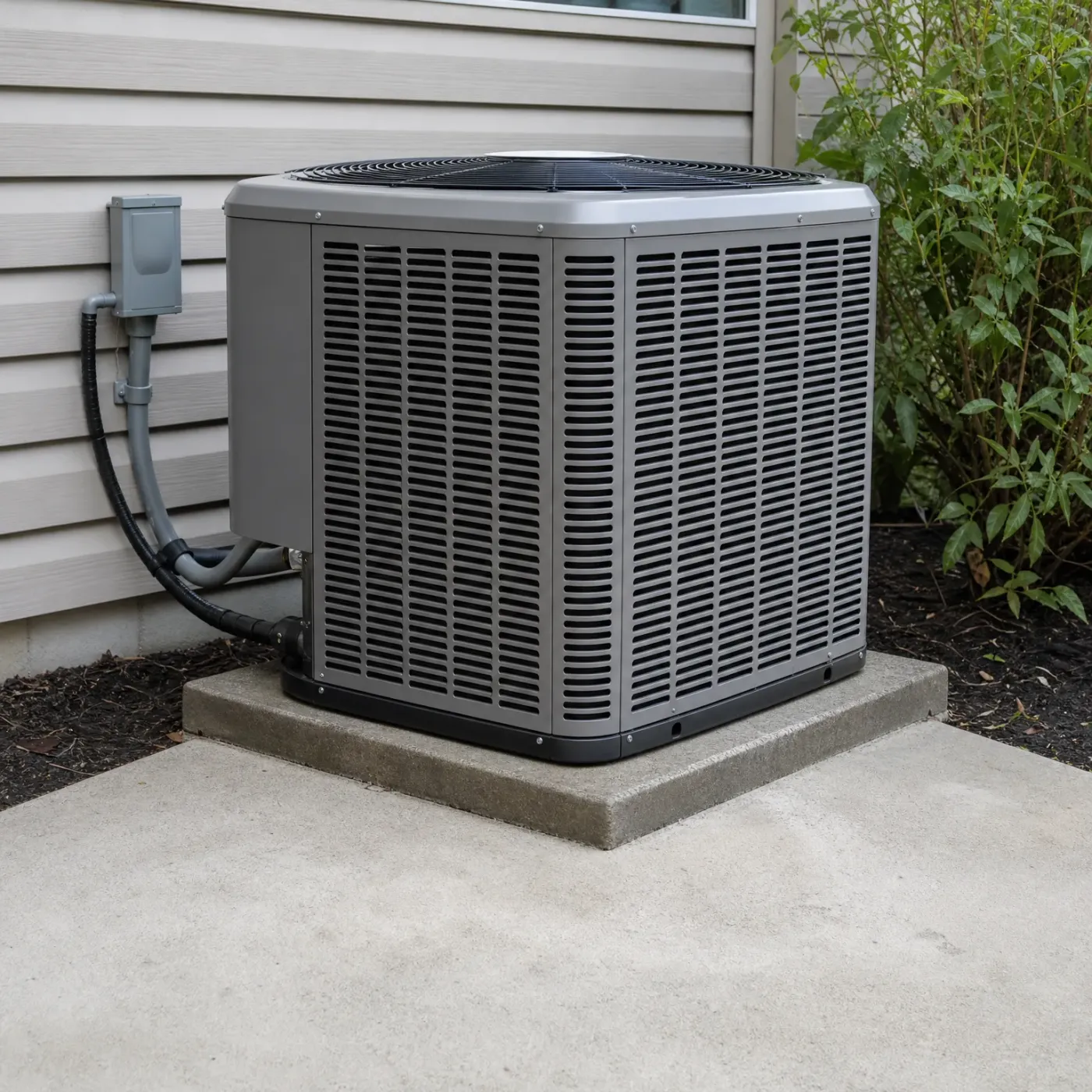
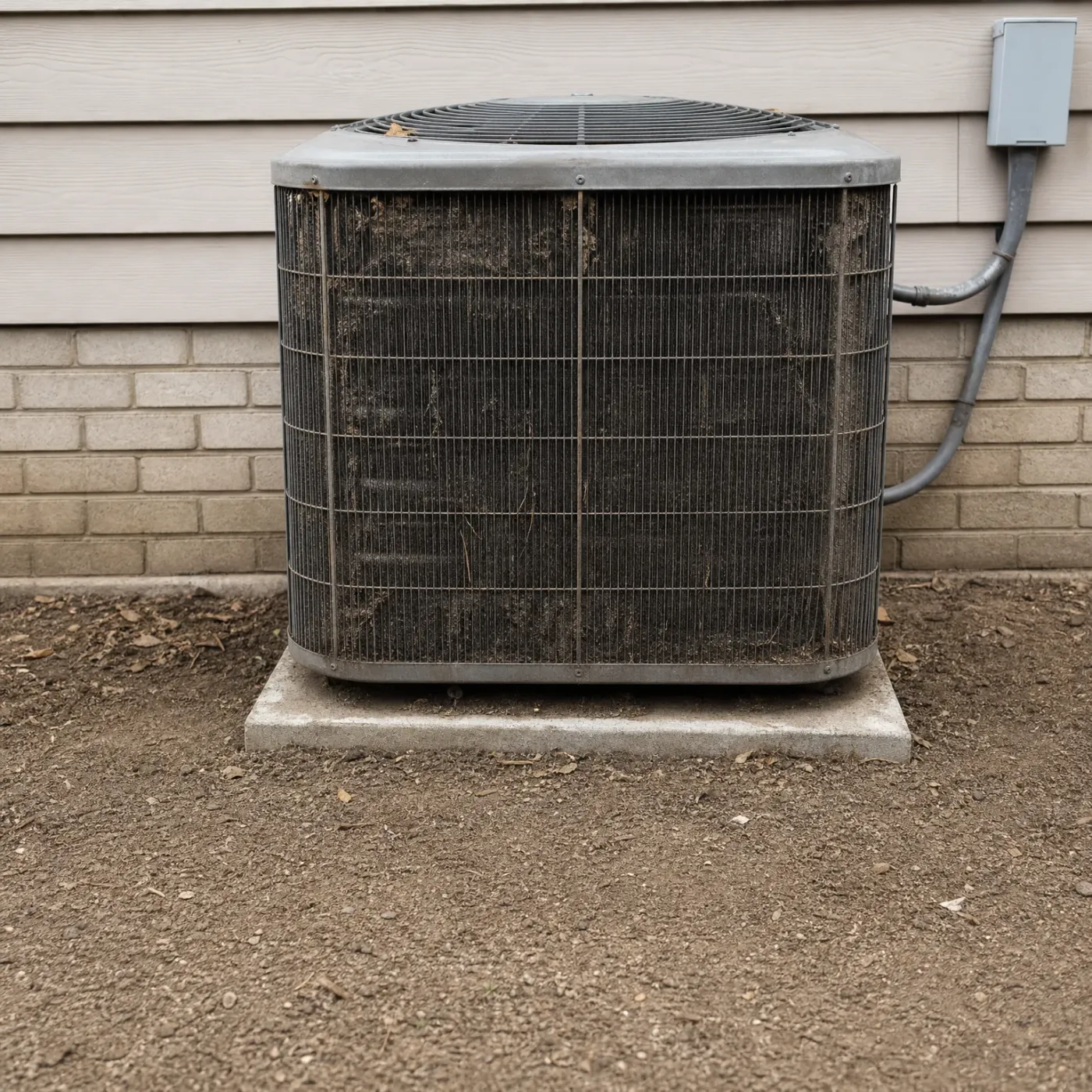
A gray outdoor air conditioner condenser unit on a concrete pad beside a house with beige horizontal siding, with an electrical disconnect box and insulated refrigerant lines on the wall and dry leaves on the ground.

Capacitor on its way out

The fan turns slow or not at all, even though you can hear the unit trying. Rust and dirt like this often sit on units that have been straining for a while. A weak capacitor makes the compressor work harder to start, and that strain adds up.

Why does my AC hum for a few seconds before it shuts off?

You turn the thermostat down and the outdoor unit answers with a hum, not a start. A few seconds later it quits, and the house stays warm. In Louisiana that hum during July or August feels like borrowed time, especially when you know waiting on a cooling problem usually ends with the compressor paying the price.

That hum means the compressor is trying to start and can't

The compressor needs a jolt from the capacitor to get its motor turning. When the capacitor is weak, it sends enough charge to make the compressor try, but not enough to get it moving. What you hear is the motor straining against a load it can't turn, and a safety switch cuts power a few seconds in to keep the motor from burning out. Each attempt puts more heat into the windings. A compressor that gets pushed to start like this over and over, through a Louisiana summer, is more likely to fail outright than one that gets a new capacitor before that happens.

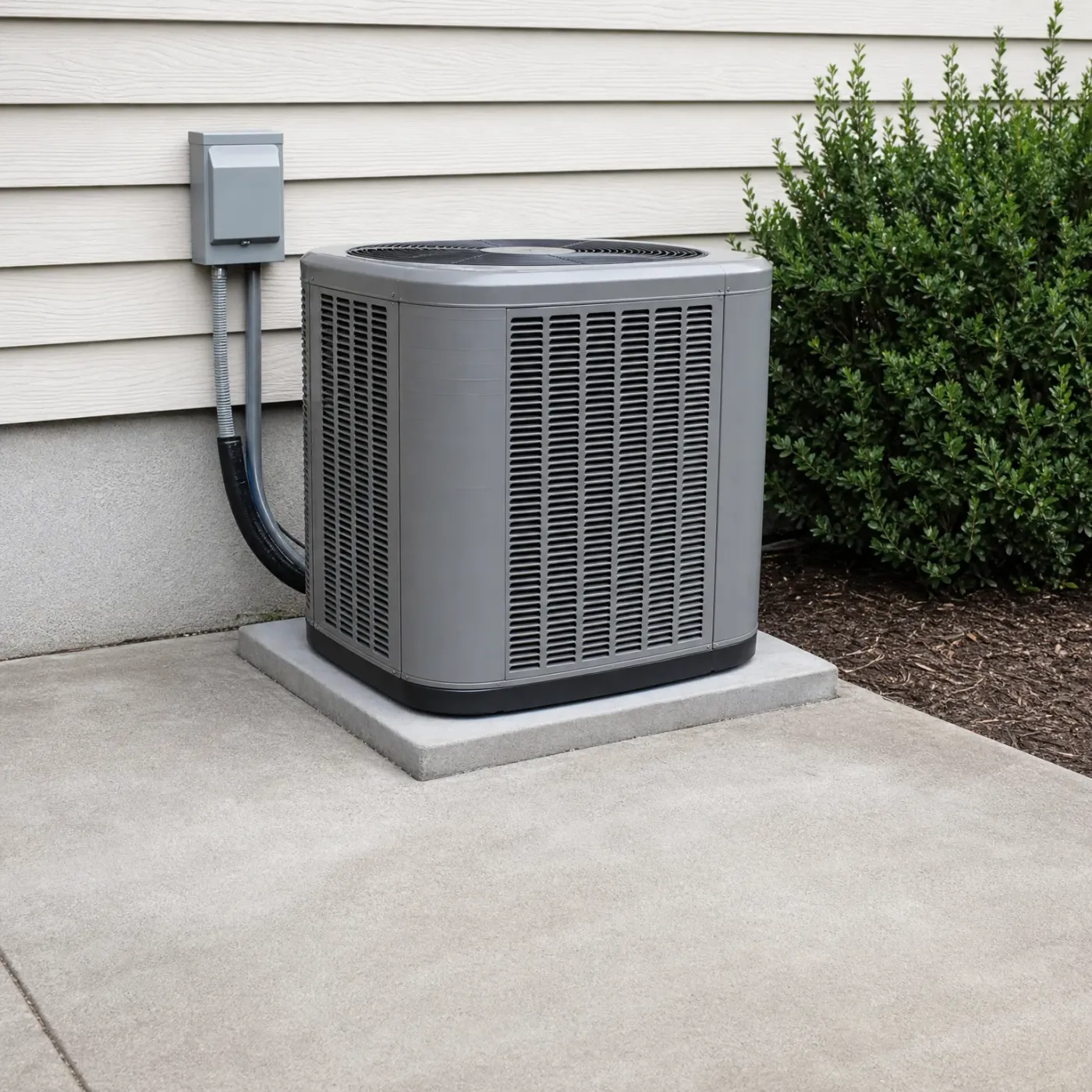
A gray outdoor air conditioner condenser unit on a concrete pad beside a house with light vinyl siding, with an electrical disconnect box and conduit on the wall and a leafy shrub with dark mulch to the right.

Working the way it should

The condenser sits on its pad, lines and conduit running up to the disconnect box. When the capacitor is good, this unit starts the moment the thermostat calls for it and keeps the house even through a Louisiana afternoon without you giving it a second thought.

An outdoor air conditioner condenser unit on a concrete pad beside a house with horizontal lap siding, with a gray electrical disconnect box and conduit on the wall and a green shrub over pine-needle mulch at left.

A capacitor on its way out

The grille looks weathered and the unit sits there, humming instead of starting. A weak capacitor still tries to fire the compressor, but with mulch and shrubs around it trapping heat, the strain shows up sooner, and the hum turns into nothing at all.

A smiling man in a navy long-sleeve shirt sits at a wooden table in a kitchen and dining area, with a ceramic mug, a potted plant, and a sliding glass door behind him.
A smiling bearded man in a green henley shirt stands at a kitchen island with a gray mug, looking off to the side, with a dining area and shelves blurred behind him.
A smiling bearded man in a navy sweater sits at a white kitchen island with a ceramic mug, with open shelves, potted plants and a range hood behind him.
A smiling man in a dark olive long-sleeve shirt sits in a kitchen beside a counter with a dark mug, with a dining table, sideboard and hallway visible in the blurred background.

Hand off the air conditioner problem

Describe what your air conditioner is doing once, in one form.

Sending the form costs nothing.

What the capacitor actually does

A run capacitor holds an electrical charge and releases it to keep the compressor and fan motor turning at a steady speed. It isn't a one-time push like a car battery. It's working the whole time the unit runs, smoothing out the power going to those motors. When it weakens, it can't hold enough charge to keep the motor spinning evenly, so the motor strains, slows, or stops partway through a cycle. That strain is what you hear as humming or see as a fan that starts and stalls.

Why heat makes it worse

Capacitors degrade faster in high heat, and the space inside an outdoor unit running through a Louisiana summer stays hot for months at a stretch. Every start-up draws a jolt of current through the capacitor, and a unit cycling on and off all day in July or August puts it through that jolt far more often than it would in a mild climate. A capacitor rated to last several years in cooler conditions can wear down sooner here. That's why a unit that ran fine last summer can start humming or stalling once the heat sets in this year.

A dirty outdoor air conditioning condenser unit on a concrete pad beside a house wall with horizontal siding above a painted brick foundation, with a gray electrical disconnect box and conduit on the wall.
Before you get your air conditioner repair
A gray outdoor air conditioning condenser unit on a concrete pad beside a house with horizontal lap siding, with a wall-mounted disconnect box and conduit to the left and a green shrub with mulch to the right.
After you get your air conditioner repair

A few minutes a day

That's how long some AC units with a weak capacitor still run before stalling. In a Louisiana summer, the house heats back up fast once it quits.

Fill out one form

One call instead of several

Send the form once and skip calling around town, explaining the stall and the hum twice over, and weighing quotes against each other yourself.

Fill out one form

Power costs 12.52 cents per kilowatt-hour statewide

At 12.52 cents a kilowatt-hour, a struggling capacitor costs you twice. The compressor draws harder trying to start, and once it stalls, your AC cycles on and off trying to catch up, running more than it should to keep the house cool. A unit that starts clean the first time uses power the way it's supposed to.

EIA-861 2025 statewide residential average

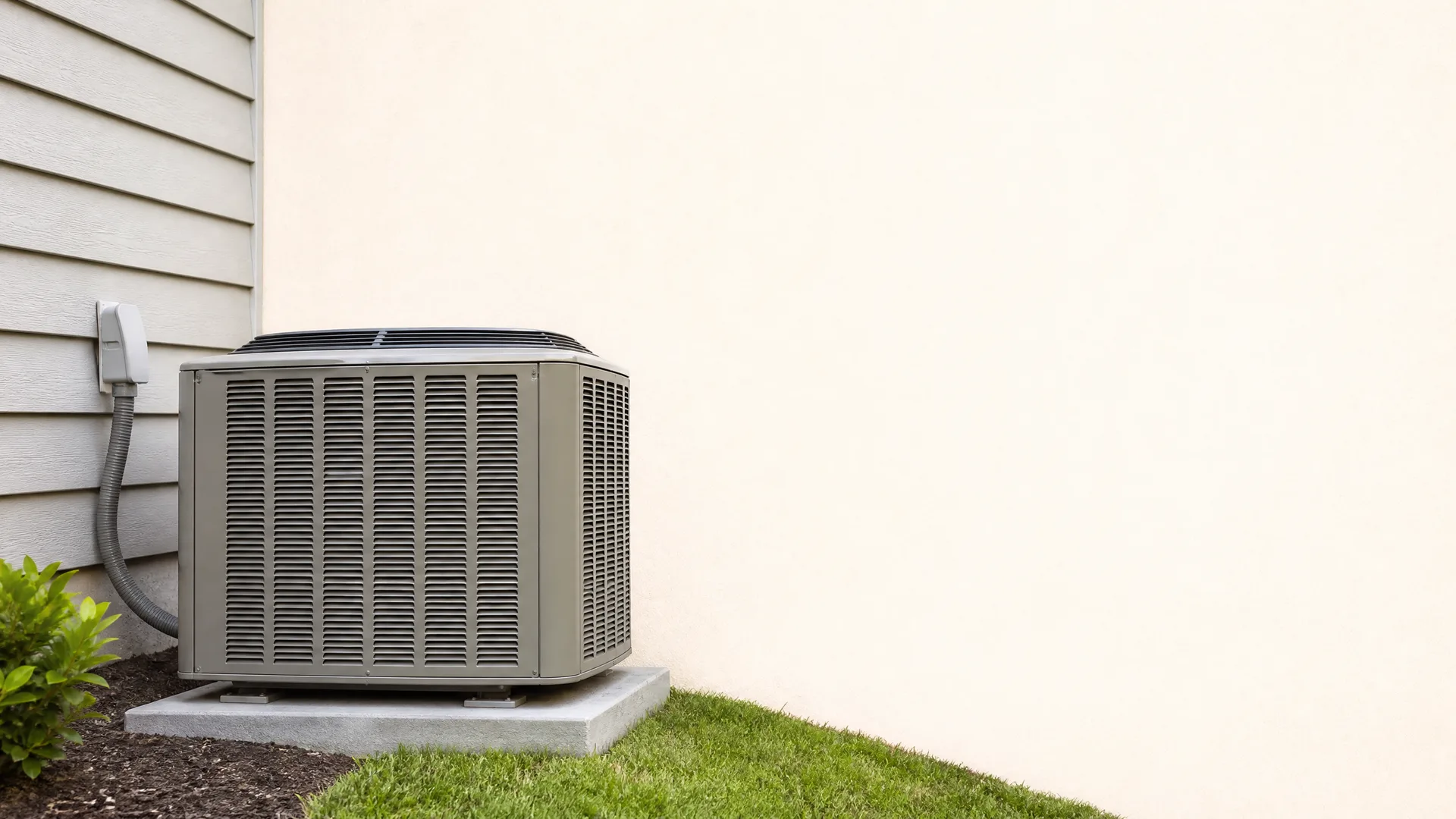
An outdoor air conditioning condenser unit on a concrete pad at the corner of a house, next to vinyl siding and a plain light-colored wall, with grass and a mulch bed in the foreground.

Letting it ride through summer

A capacitor that's starting to fail doesn't always quit outright. The AC might still start most of the time, just slower, with more hum before it catches. Each hard start puts more load on the compressor than a clean one does. Keep running it that way through a Louisiana summer and you're asking the compressor to absorb months of starts it wasn't built to work that hard for, right when the house needs the AC most.

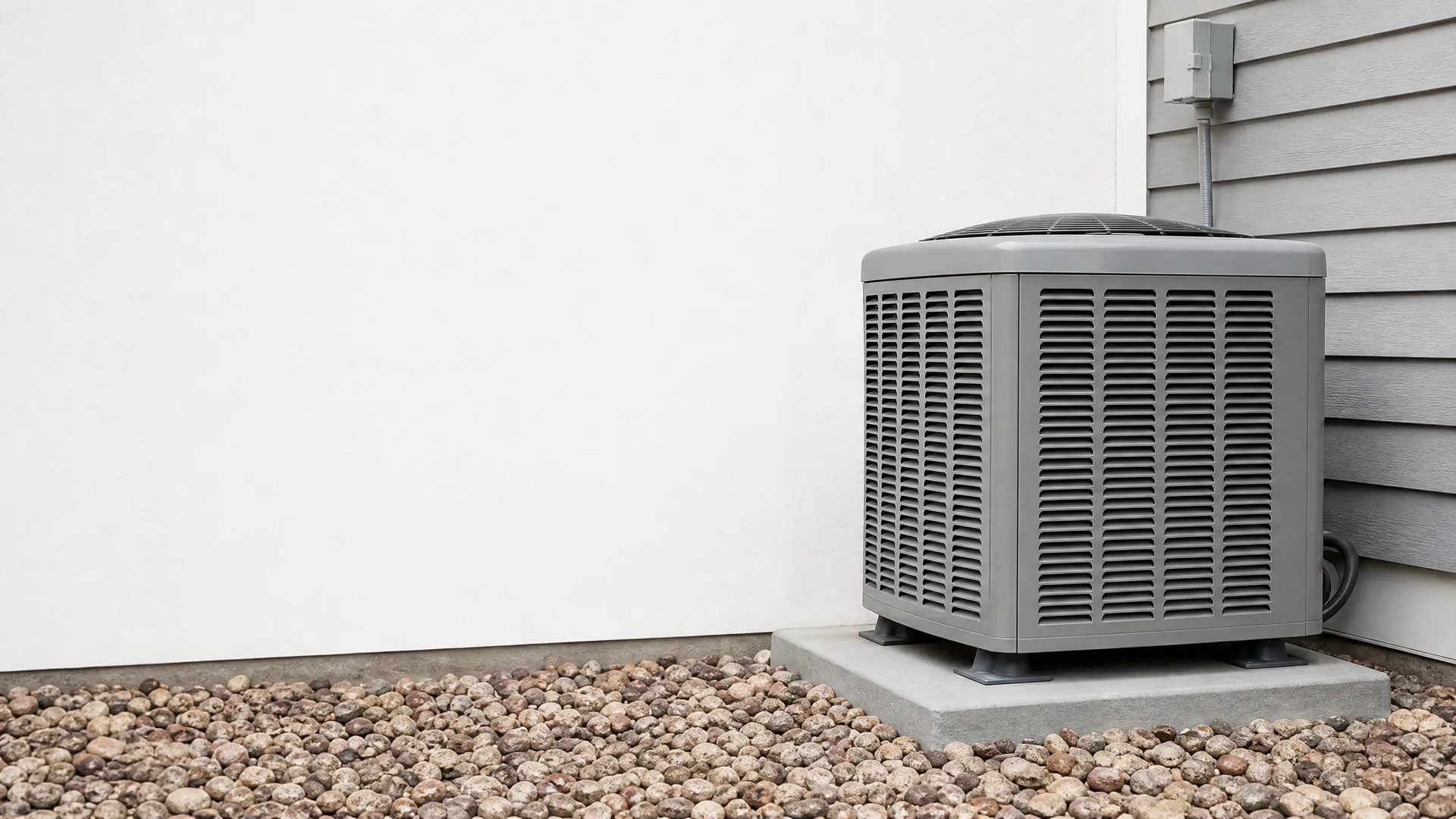
A gray outdoor air conditioning condenser unit sits on a concrete pad beside a white stucco wall and gray horizontal siding, surrounded by rounded landscaping gravel, with an electrical disconnect box mounted on the siding above.

Getting it looked at now

A contractor can test the capacitor's actual capacitance against its rating in a few minutes and tell you straight whether it's still within range or on its way out. If it's weak, swapping it is a small, contained repair. It doesn't touch the compressor or the coils. Catching it here means the only part that wears out is the fifteen dollar part built to wear out, not the compressor behind it.

A closed dark laptop and a ceramic mug of coffee on a wooden dining table, with wooden chairs, a dark kitchen cabinet with cutting boards and a potted plant, and a leafy plant by a window in the background.

A hum, a slow start, a unit that quits early

That's a bad capacitor. It won't fix itself, and running the unit on a weak one just means harder starts and a compressor working harder than it should through a Louisiana summer. The sooner someone checks it, the less strain the rest of the system takes.

Send the form once and the search ends there. No calling around to find who's free, no explaining the hum and the slow fan twice over to different shops, no sitting on quotes trying to guess which one is fair. A licensed contractor gets your situation and takes it from here, and that part of the work is off your plate.

Interior corner with a beige sofa holding a dark green and a light cushion and a textured throw, a potted small-leaved tree beside a white-framed window, and a dark shallow bowl on a wooden coffee table in the foreground.
A man in a blue T-shirt sits on a light gray sofa, laughing while looking at an open laptop in the foreground, with a framed picture, lamp and potted plant behind him.
A bearded man in a blue and brown plaid flannel shirt stands indoors looking out a window at snow-covered trees, with a ceramic mug on the windowsill.

Hand off the search today

A capacitor that hums, starts slow, or quits early won't get better on its own, and a Louisiana summer gives it no time to coast. Send the form once and you're done hunting: no scrolling through contractor listings, no calling three companies and repeating the same symptoms to each one, no sitting on quotes trying to compare them. Someone licensed to check the capacitor and fix what's wrong takes it from here.

Skip the search

Describe your air conditioner job once, to one pro.

It costs nothing to send, and you don't have to hire anyone.