
How to lower your AC bill in a Louisiana summer
The biggest drop in your AC bill comes from keeping the system maintained, not from changing the thermostat. A dirty coil or a low refrigerant charge makes the compressor run longer to cool the same house, and in Louisiana the unit is already working against heat and humidity most of the day from April into October. A clogged filter or a coil caked with dust forces it to run longer still to pull out that moisture, and that extra runtime is what shows up on the bill. A contractor who checks the coil, the refrigerant charge and the airflow once a year catches that before it costs you a summer's worth of extra electricity. The thermostat setting matters less than people think. What matters is whether the system is working as hard as it has to, or harder.


Why does a dirty AC coil make my electric bill go up?
You keep hearing that a dirty coil costs you money, but it's not obvious why. The coil just sits there. It doesn't move, it doesn't switch on and off, so it's hard to picture how dust on it translates into a higher bill at the end of the month. You want the actual mechanism, not just the warning.
A dirty coil can't shed heat the way it's supposed to, so the compressor runs longer to do the same job
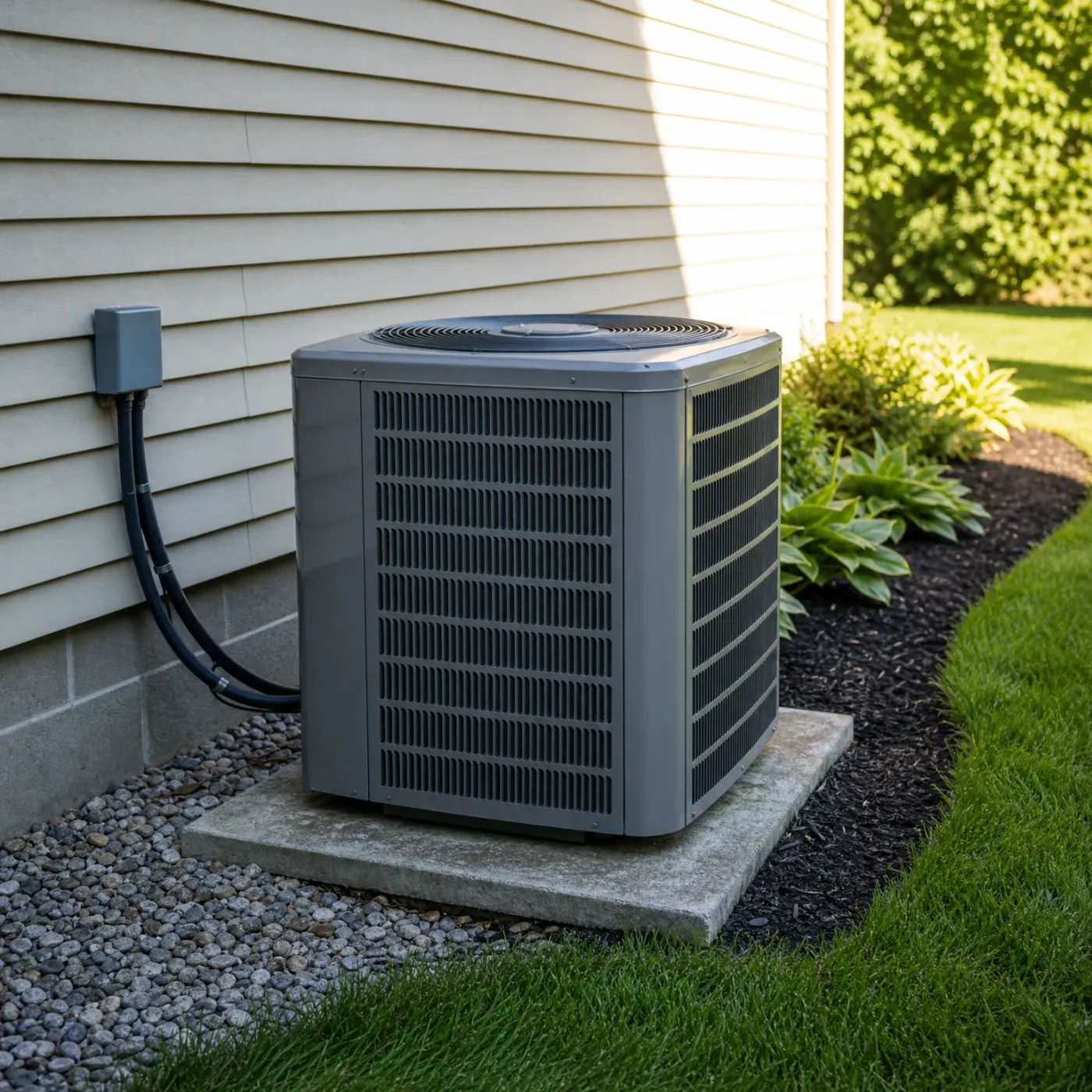
The outdoor coil is where the heat your house collects gets released into the air outside. When it's coated in dust, pollen, or grass clippings, less of that heat can pass through the metal. The refrigerant stays warmer than it should, so the compressor has to run longer to pull the same amount of heat out of your house. Run time is what shows up on your electric bill, not temperature. A furnace filter clogged with dust causes a version of the same problem on the indoor side, cutting off airflow across the indoor coil. In Louisiana, pollen and cut grass build up on an outdoor coil fast, which is why a coil that looked clean in March can be restricting airflow by July.



A contractor checks refrigerant pressure against what your system's nameplate calls for.
The condenser coil gets washed clean so heat can leave the refrigerant outdoors.
The evaporator coil gets inspected and cleaned so it pulls heat from your air.
Electrical connections and capacitor readings get checked to catch a failure before it happens.


You don't need a gauge to know your system is struggling. You feel it in the house. The air runs and runs and the living room still feels sticky, because a coil caked with dirt can't pull moisture out the way it should. You hear it in a compressor that kicks on and off more than it used to, or one that seems to run from noon until dark in July and August without much break. Some afternoons the breaker trips, because a compressor working this hard pulls more current than it was built to draw. And then the bill shows up higher than last summer's, even though nobody in the house changed how they use the thermostat. None of that is the thermostat's fault. It's the equipment, working harder than it should to do the same job, and every one of those signs is worth paying attention to before it gets worse.
What a strained system costs you
- A window unit left to run all day while you're at work costs you less than a central system straining against a dirty coil.
- Humidity that won't drop even with the thermostat set low usually means the evaporator coil is too clogged to pull moisture out of the air.
- A compressor that short cycles or runs almost nonstop through July and August wears out years before it should.
- Rooms that stay warm no matter how long the system runs often point to a refrigerant charge that's fallen below what the nameplate calls for.
- A breaker that trips on the hottest afternoons is often the compressor drawing more current than it should because it's working too hard.
- A bill that climbs well past what it was last summer, with no change in how you use the thermostat, points back to the equipment itself.





Skip calling around
Your request goes to one pro, not a list of companies.
Describe your air conditioner job once, to one pro.
Sending the form costs nothing.
Skip Maintenance or Get It Done
Skip maintenance
- The coil keeps collecting dust through July and August, and the compressor runs longer each time to push the same heat out of the house.
- Refrigerant charge drifts off from what the nameplate calls for, and nobody catches it until the house won't cool below 78.
- A clogged filter restricts airflow across the evaporator coil, so the system pulls less moisture out of the air even as it runs more.
- Small problems like a weak contactor or a dirty blower wheel go unnoticed until they cause a breakdown in the middle of a heat wave.
- You find out something's wrong when the electric bill arrives or the house stops cooling, whichever comes first.
Get it maintained
- A contractor checks refrigerant pressure against the nameplate and adjusts the charge if it's off, so the compressor isn't working to make up for it.
- The condenser and evaporator coils get cleaned, so the system moves heat outside and pulls moisture out of the air the way it's built to.
- A local contractor who services AC systems all summer knows which parts tend to fail first in this climate and checks those.
- One contractor handles the visit, so you're not fielding calls from several companies or explaining the same thing twice.
- Problems like a failing capacitor or low airflow get caught on the visit instead of during the next 95-degree afternoon.

What a dirty filter does to airflow
A clogged filter chokes the air moving across the evaporator coil. Less air moving over that coil means less heat pulled out of your house per minute, so the system has to run longer to get the living room down to 72. The blower motor also works harder to push air through the clog, and that pulls more amps the whole time it runs. A filter checked and swapped on a regular schedule keeps that airflow where it should be.

Why the outdoor unit needs room
Your condenser sits outside and dumps heat from the refrigerant into the air around it. If it's crowded by shrubs, leaves, or anything stacked against the cabinet, that heat has nowhere to go. A contractor doing maintenance clears debris from the coil fins and checks that there's open space on all sides. In a Louisiana summer, with the unit already fighting high humidity, a blocked condenser means longer run times and a compressor working harder to move the same amount of heat outdoors.
Power costs 12.52 cents per kilowatt-hour statewide
At 12.52 cents per kilowatt-hour, every hour your compressor runs longer than it needs to shows up on the bill. A unit fighting a dirty coil or a weak charge can run most of the afternoon to hold 72, and you pay for every one of those extra minutes.
EIA-861 2025 statewide residential average

A clean system is the cheapest way to cool a Louisiana house
A clean coil and a correct refrigerant charge are what keep your compressor from running longer than it has to. That's the whole answer. Everything else, the thermostat settings, the ceiling fans, saves you less than a technician cleaning that condenser and checking the charge against your nameplate.
Finding someone to do that work is its own chore. You'd be searching through listings, calling a few companies, explaining the same thing about your unit each time, then sitting with quotes trying to tell which one actually means the same job. A contractor who works on systems like yours all summer already knows what a Louisiana coil looks like by August and what usually drifts out of range first. One contractor looks at your unit, not three bidding for the work.

Describe it once
The pro who reaches out is licensed in Louisiana.
You're not committing to anything by asking.